
Marie and Soumaïla Kanla have built their cabinetmaking business on one principle: using only naturally dried wood. In their workshop in Zibzoaga, Burkina Faso, they refuse to cut down any living trees and instead work with naturally dried wood collected in the wild. For fifteen years, this choice has allowed them to make furniture and works of art without felling a single tree. In a country like Burkina Faso, which loses around 250,000 hectares of forest land every year to human activity, their approach has won praise from environmental advocates.
In Koubri, some thirty kilometres from Ouagadougou, the road gradually leaves the tarmac behind and turns into a dusty track. It winds between grass yellowed by the sun and trees whose branches have lost their leaves. On either side, the vegetation is bare and sparse. Then, around a bend, an island of greenery appears, where grass and trees remain lush. This is Marie and Soumaïla Kanla’s 1.5-hectare plot in the village of Zibzoaga, in the municipality of Koubri, Burkina Faso. The cabinetmaking couple set up their workshop here four years ago. The green of the site stands in sharp contrast to the dryness of the surrounding landscape.
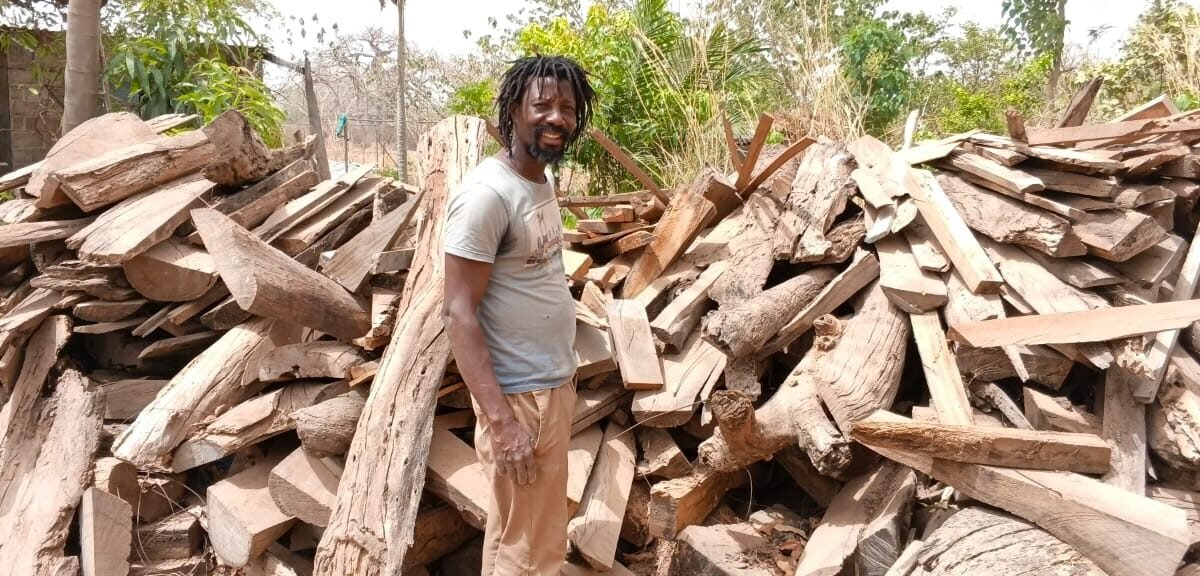
In the yard, tree trunks are stacked in imposing piles. Yet not a single tree here was cut down to supply the production. It is all dead wood, gathered in the bush and then turned into furniture and everyday objects. Soumaïla Kanla is in the middle of creating a map of the world, intended to be displayed in an international airport in West Africa. “I don’t cut green trees. I don’t kill trees to do my work,” Kanla said.
Beneath a leafy giant shea tree, employees plane, saw and assemble pieces of wood to make furniture. “I used to think dead wood was only good for making fires. Here, I learned that you can make furniture and utensils out of it,” explained Édouard Lankoandé, a carpenter at the workshop.
Choosing dead wood, a principle of artistic creation
A cabinetmaker and co-founder of the company Kaala Africa, Soumaïla Kanla chose to work with wood without cutting down trees. “I collect dead or naturally dried wood and transform it. I don’t cut green trees,” he says. It is a commitment born from the realisation that forest resources are limited in Burkina Faso.
“By choosing to work only with Burkinabe wood, you still run into a major problem: even though there are trees, Burkina Faso is not a forest country. And you can see the harsh conditions in which wood grows. So for me, it made more sense to use only end-of-life material, wood that has already served its purpose, that has given its time of chlorophyll. In my research, it turns out there is quite a lot of naturally dried wood,” he explained.
Kanla has been a cabinetmaker for about fifteen years. His workshop used to be in Fada N’Gourma, in eastern Burkina Faso, about 230 kilometres from Ouagadougou, the country’s capital. With his team, he would comb the bush in search of dead wood. “We would set off, camp out in the bush, follow the riverbanks and collect dead trees. We walked for kilometres looking for tree trunks,” Kanla recalls with nostalgia.
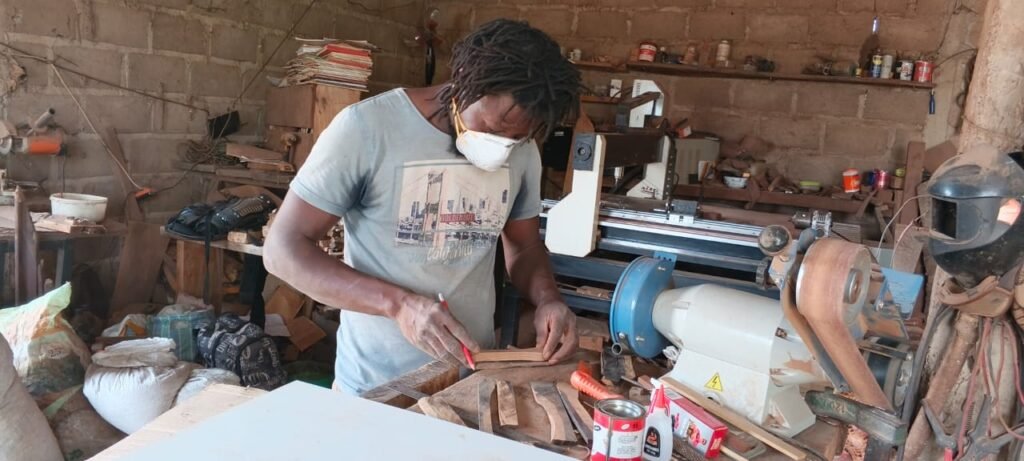
But the security situation has profoundly changed this reality. “We can’t go everywhere like before. I won’t rub salt in the wound; everyone knows what is going on,” he says, alluding to the terrorism Burkina Faso has faced for about a decade. Because of this insecurity, he had to close his first workshop and relocate to his current site. Faced with these constraints, the cabinetmaker adapts and reinvents himself. He now works with existing stocks or wood from more accessible areas.
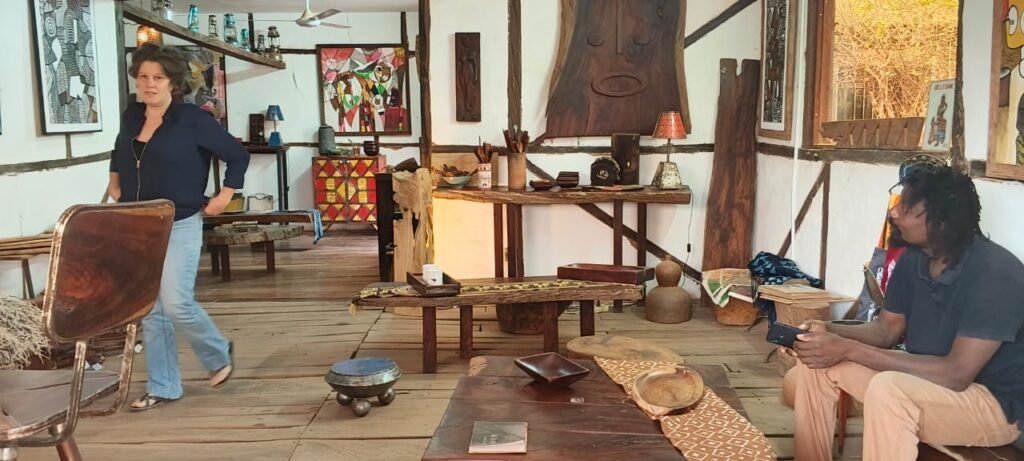
In Ouagadougou, in the Zone du Bois neighbourhood (the area takes its name from the many trees found there, editor’s note), the Kanla couple display their creations in a gallery. Furniture, spoons, plates and decorative objects are sold there, as well as through their website. Marie Kanla, Soumaïla’s wife, runs the space. “I originally worked in social services. Then I got involved in the project,” she explains. For fifteen years, the cabinetmaking couple has made their creations from naturally dried wood. For Marie, the project’s environmental commitment is central. “We are in a Sahelian country. Cutting down green trees makes no sense. Making use of dry wood is the obvious choice,” she says.
An approach praised by environmental advocates
The Kanla couple’s commitment to preserving trees appeals to customers who care about environmental issues. One of them is Thierry Nianogo, an economics lecturer at Joseph Ki-Zerbo University (Burkina Faso), who has furnished his home with their pieces. “These creations are ethical. They take environmental protection into account and help reduce our carbon footprint,” he says.
In a context shaped by climate change, the academic believes this kind of initiative is necessary. “Tree clearing for agriculture or firewood reduces our ecosystems’ capacity to store carbon. Using naturally dried wood is becoming a necessity to limit the impact,” he adds.
Red alert for the country’s forests
Behind this individual initiative lies a more alarming reality. In Burkina Faso, tree clearing and deforestation remain a major problem. According to the 2024 report on Burkina Faso’s National REDD+ Strategy, the country loses 247,145 hectares of forest land (about 350,000 football pitches) every year to human activity, notably agricultural expansion, fuelwood harvesting, overgrazing and bush fires.
This pressure weighs on forest resources that are already limited. According to a report by the International Union for Conservation of Nature (IUCN), Burkina Faso’s state forest estate is estimated at 3.9 million hectares, or about 14% of the country’s land area. “Deforestation is a serious problem in Burkina Faso. To begin with, our national forest cover is around 14%, while the international average is 30%. That means we are not even at the average. On top of that, the annual deforestation rate is currently high compared with the potential,” says Emmanuel Diagbouga, an environmental inspector.
In a country where 80% of the working population lives off agriculture, Emmanuel Diagbouga warns that tree clearing and deforestation will weigh heavily on efforts to achieve food security. “We are destroying the ecosystems that support our agriculture. It’s like sawing off the branch we are sitting on,” he said.
The loss of forests, Diagbouga said, also leads to soil impoverishment. “There is what we call the soil seed bank. When you destroy the vegetation, even the soil loses its ability to regenerate. Eventually, some land becomes completely barren. This rate of deforestation is therefore not sustainable,” Diagbouga warns.
For him, initiatives such as the Kanla couple’s offer an alternative. “Collecting dead wood means not adding pressure on living trees,” he says, while stressing that reforestation and raising public awareness are essential levers.
Speaking of tree planting, since settling on the site in Zibzoaga four years ago, the Kanla couple have also set about re-greening the area. A nursery has been set up, where several species of trees and climbing plants have been planted, including acacias (Acacia nilotica), néré (Parkia biglobosa), mango trees (Mangifera indica) and vines (Saba senegalensis).
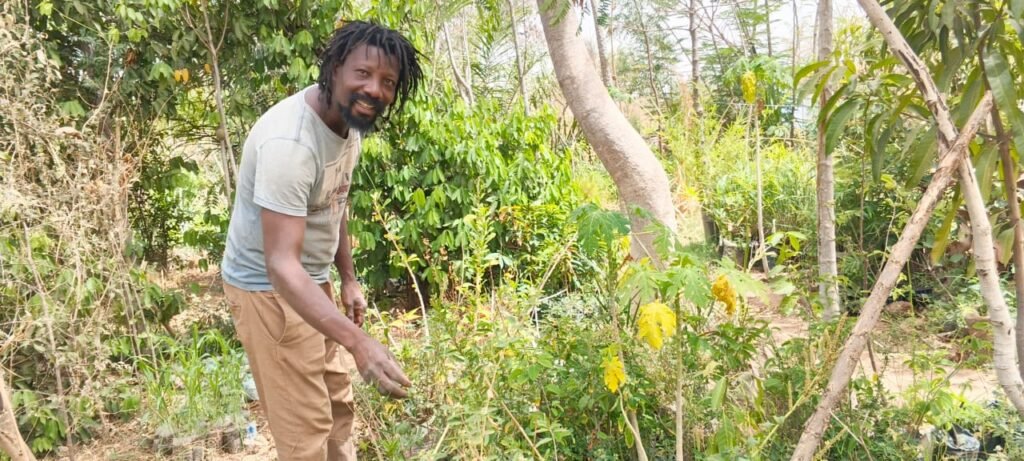
Even though they “don’t cut down trees” for their creations, Marie and Soumaïla Kanla believe every citizen must act at their own level by planting and caring for trees, in the face of the threats hanging over the forests.

Commentaires (0)