
In Burkina Faso, where nearly 1.8 million hectares of forest have disappeared and farmland is “in peril”, some artists have chosen to take up the environmental fight through music. Their songs raise the alarm about vanishing trees, land degradation and the effects of climate change. Salif Bologo, Sibiri Ouédraogo and Ibrahim Simporé are among the musicians who have made protecting nature an artistic cause. Through concerts and festivals dedicated to the environment, they use their voices and their art to raise awareness and encourage people to change their behaviour. For these artists, music has the power to touch people’s consciences and reach communities better than official awareness campaigns.
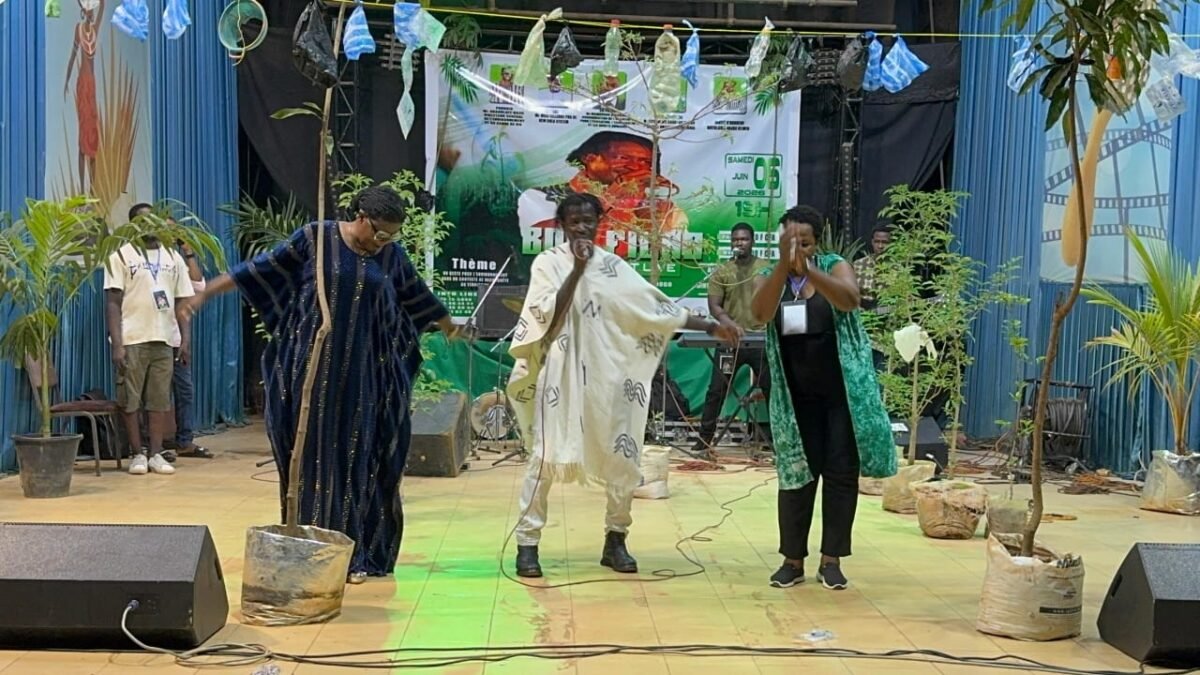
On 6 June 2026, at the Jardin de la musique Remdoogo, a cultural venue in Ouagadougou, Salif Bologo, known as Bol Filas, takes the stage and performs several songs, including “Planète dégradée” (“Degraded Planet”), a track in defence of the planet.
“‘Planète dégradée’ is about climate change. It’s a song that calls on people to protect our forests and our soils. Plants give us oxygen and food. They also nourish the land,” the artist explains.
“The land is becoming poorer and poorer. It no longer fulfils its role as a nurturing mother. We need to rethink the way we live through reforestation and ecosystem restoration,” says Moukailou Dorinta, director of Forest Engineering and Infrastructure, a technical body involved in planning, building and monitoring infrastructure for the sustainable management of forests and natural resources in Burkina Faso.
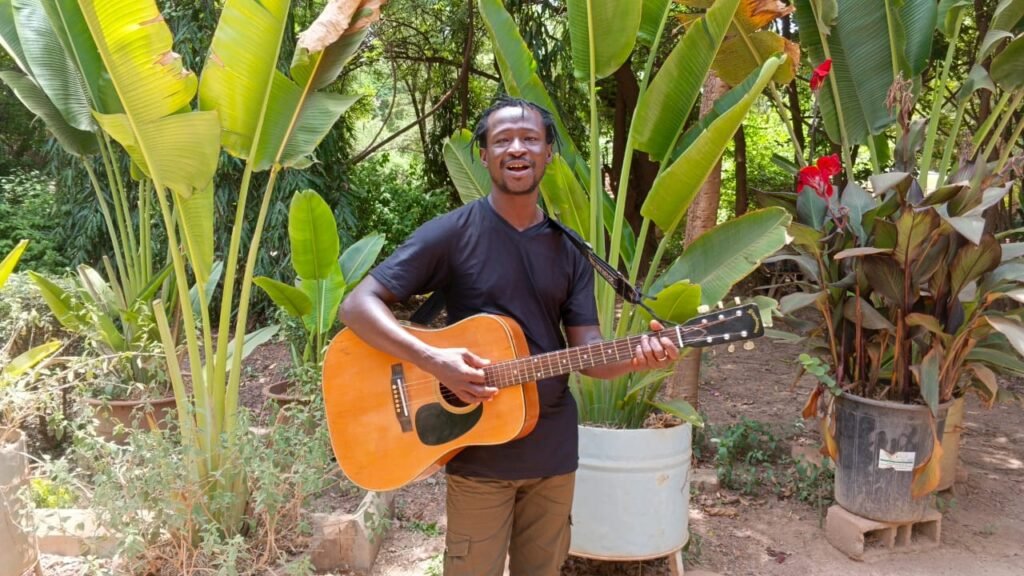
Salif Bologo’s commitment to nature dates back to his childhood. The son of a landscape gardener, he says he discovered the importance of plants and natural resources at a very young age. “I worked with my father in his plant garden. I understood early on the importance of what nature gives us. But as I grew up, I saw the harm we do to the environment,” he explains.
Once he became an artist, he decided to carry this cause through music. He began by writing songs about protecting nature, which he played for those close to him. In February 2011, he released his first album, which included several tracks devoted to ecological challenges, among them “Planète dégradée”.
“I asked myself, why not wage this fight through music? That’s how this song was born,” Bologo explains. In his lyrics, he describes a reality familiar to Burkina Faso: the gradual disappearance of forests, land degradation and the effects of climate change.
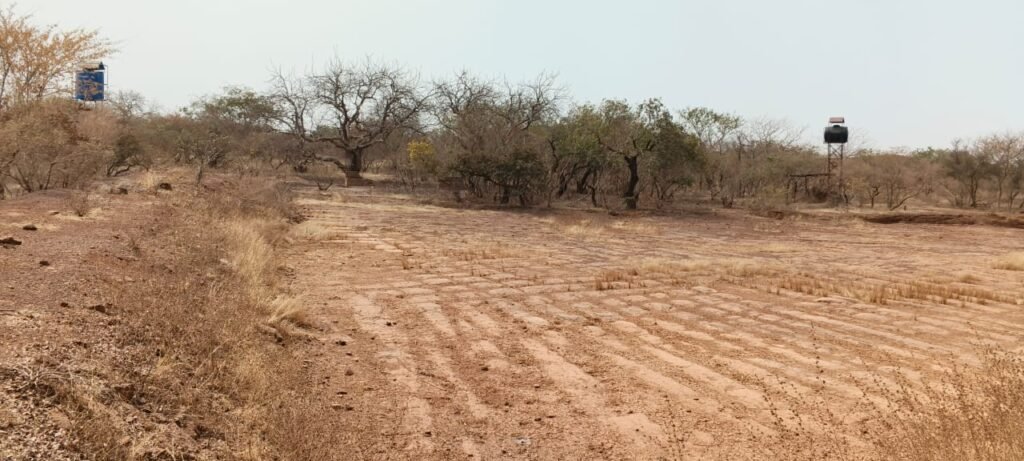
According to a study by Burkina Faso’s National REDD+ Strategy, the country lost nearly 1.8 million hectares of forest area between 2000 and 2022. Forests shrank from 6.9 million hectares to 5.1 million hectares over that period. The 2024 report on the strategy states that Burkina Faso loses 247,145 hectares of forest land every year, or about 350,000 football pitches.
Land is also under pressure from agricultural expansion, excessive logging, bush fires, urbanisation and repeated droughts. According to the 2024 report on the “State and Dynamics of Soils” in Burkina Faso, nearly 19% of the country’s land is in peril.
Salif Bologo’s commitment goes beyond music. “I have been doing environmental education in schools since 2011. I meet pupils and we talk about environmental issues. I often set up eco-clubs,” he says.
Musicians raise their voices
On Burkinabe music stages, the ecological message is gaining ground. Among the committed artists, Sibiri Ouédraogo, known as Oscibi Jhoann, makes protecting nature a central theme of his songs.
“In my compositions, I focus on protecting nature. This issue matters to me because I am the son of a farmer. I know how useful nature is and its impact on human life,” he explains. For him, the destruction of nature ends up directly affecting people. “When the environment is degraded, humanity suffers. Beyond other struggles, we also need songs about protecting the planet, because nature is life,” the reggae artist stresses.
His commitment is also tied to his personal history. Born in western Côte d’Ivoire, he remembers a forest that has now almost disappeared. “There was a dense forest where you could find everything. It rained all the time and there were lots of animals. Years later, I couldn’t see anything anymore. The trees had been cut down, there had been bush fires and the animals had disappeared,” he recalls.
After arriving in Burkina Faso, his country of origin, in 1998, the artist says he was saddened to see other forms of degradation: bush fires, deforestation and some excessive use of chemicals. “It is my duty, as a human being and as an artist, to carry this message and say that we must protect nature,” he says.
In 1999, he released a song called “Environnement” (“Environment”). In it, he calls on people to plant and care for trees, and to limit practices that destroy ecosystems. “When bush fires are started, all the vegetation is affected. Wildlife and plant life suffer,” explains Clarisse Coulibaly, a forestry engineer and environment programme analyst at the United Nations Development Programme (UNDP).
A study by the Permanent Interstate Committee for Drought Control in the Sahel (CILSS), published in October 2025, shows that Burkina Faso recorded more than 182,000 bush fire hotspots, a 259% increase compared with the 2020-2024 average. According to the study, this increase is one of the highest in ECOWAS and the Sahel, and it is leading to soil degradation and a reduction in vegetation cover, jeopardising the availability of fodder for livestock.
Agroecology at the heart of the musical message
For Sibiri Ouédraogo, protecting nature also means farming in a way that respects human health. “I also sing about agroecology, which is linked to human health. When we degrade the land, we eat disease. Today, chemical pesticides are causing deaths,” he says.
With these words, the artist is referring to people in Burkina Faso who died after eating food containing pesticide residues. On 1 September 2019, in Didyr in the Nando region (about 120 km from Ouagadougou), 13 members of the same family died after eating food containing pesticide residues. A few days later, on 9 September of the same year, five more people died in Nayamtenga in the Nakambé region (about 140 km from Ouagadougou) in similar circumstances. At a press briefing on 11 September 2019, the then health minister, Claudine Lougué, explained that tests carried out on the victims and the food they had eaten had revealed high levels of pesticides.
Faced with these challenges, some artists have decided to go further by creating spaces for awareness-raising. This is how the International Music Festival for the Environment came about in 2023, founded by Ibrahim Simporé, alias Ras Simposh. On 12 June 2026, in Tampouy, a working-class neighbourhood of Ouagadougou, artists gather on stage for the festival’s fourth edition. Their message is the same: protect the planet. During the performances, the songs speak of trees, water, pollution and the consequences of human activity.
On stage, Ibrahim Simporé warns of the dangers of the cyanide used in some gold-panning activities. “I talked about the cyanide used by gold panners, which is dangerous for people, nature and animals,” he explains.
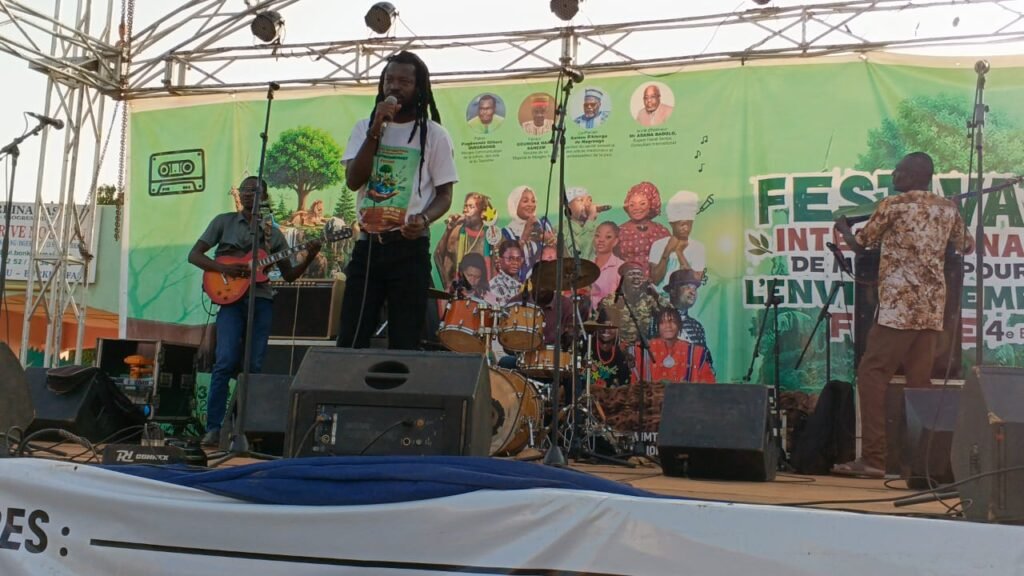
For Simporé, the festival makes it possible to reach a wider audience. “Through the festival, we can reach more souls on environmental issues,” Simporé said.
“What I took away from this festival is that through our small actions, we can avoid destroying the nature we will leave to future generations,” said Ousmane Sawadogo, a festival-goer.
According to Jérôme William Bationo, a media and development expert specialising in climate issues, the strength of music lies in its ability to reach a wide audience. “Music is one of the most powerful tools we have. Artists can touch people’s emotions, identity and daily lives,” he explains in an email to Mongabay. In his view, environmental issues are still too often confined to institutions, even though they directly concern citizens.
“Music gets into courtyards, homes and public transport. You don’t need any particular level of education to understand it,” he adds.
Despite their commitment, the artists feel that “green music” still receives little support in Burkina Faso. Salif Bologo says he has experienced this first-hand. After his first concert dedicated to the environment in February 2011, he had to wait until June 2026 to organise a second one, an initiative he describes as hard to pull off because of the difficulty of raising funds.
Ibrahim Simporé makes the same observation, explaining that organising the International Music Festival for the Environment was made difficult by a lack of financial resources.
Despite these difficulties, the artists say they will keep spreading their message. For them, their songs are another way to effectively raise awareness among a population that faces the many consequences of nature’s degradation every day.

Commentaires (0)